
Permanent Outdoor LED Displays – The Key Differences for Longevity
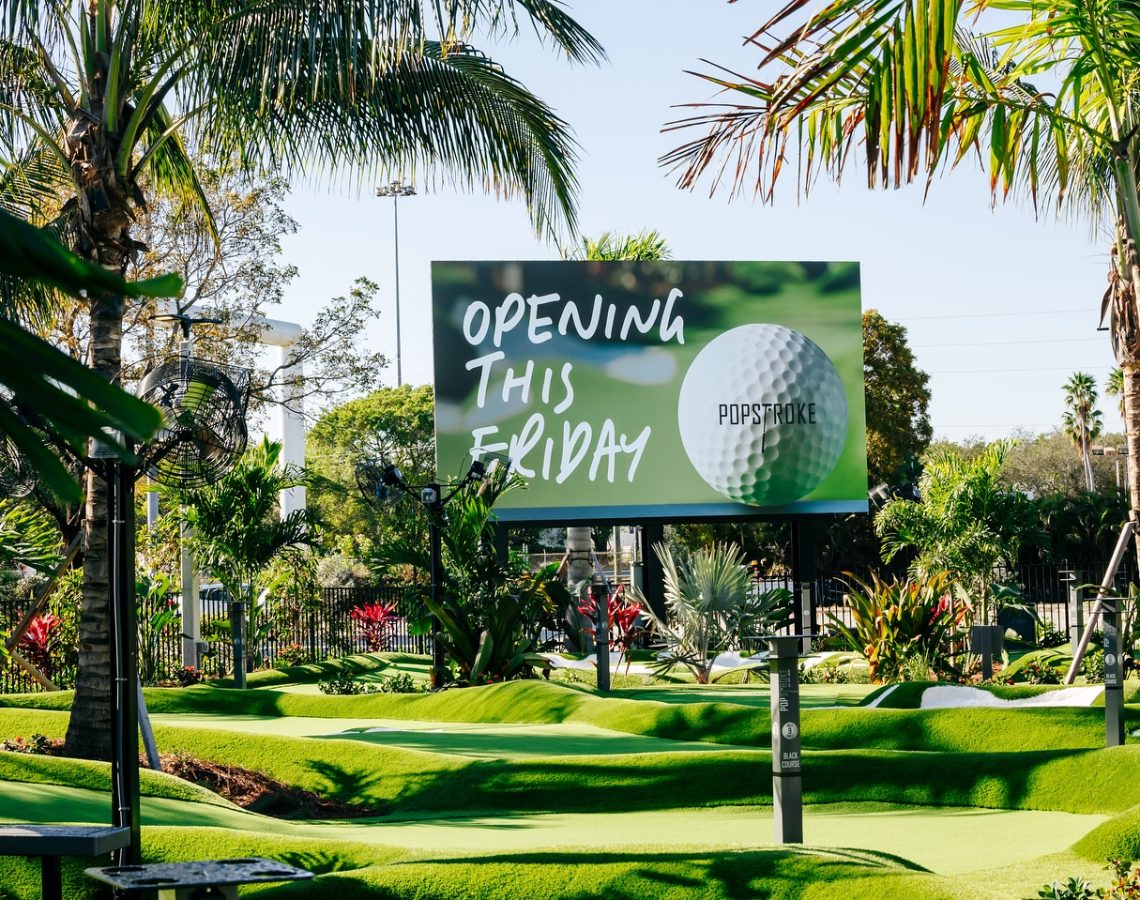
One of the greatest advantages of an LED display is its capability to be used outdoors. The thousands of Light-Emitting-Diodes can offer brightness sufficient for images, text, and video to be seen in bright daylight — even direct sunlight — with vibrant colors that projection and LCD technology cannot achieve. In addition to their high-output capabilities, LED displays can be more efficient, offer lower maintenance, and have a longer lifespan than other display technologies, making them a popular choice for large-scale outdoor applications across many industries.
Outdoor LED displays have a weatherproof design and use higher-output LEDs to ensure visibility in sunny daylight conditions. But those differences can be just the tip of the iceberg. Both indoor and outdoor LED video walls come in versions designed for permanent installation, as well as versions designed for mobile or staging use — set up and taken down repeatedly for events. Each type offers its own set of features suited to its application.
As LED video walls have grown in popularity and become more affordable, a common source of confusion has emerged in the market. Mobile and staging panels carry a lower price point and are sometimes mistakenly specified simply under the assumption that they’re weatherproof. Some models may even have a lower weatherproofing rating in the back compared to the front. While technically possible in some cases, it is not an ideal solution — these panels are engineered for a very different use case. Permanently installing a mobile/staging panel outdoors can lead to premature failure and may void the warranty for use outside its intended application type.
For a display that will live outdoors for its lifetime — exposed to weather, temperature swings, and potentially extreme conditions — the distinction matters considerably. Here is what to look for.
IP Rating & Corrosive Resistance
IP (Ingress Protection) rating measures how well an enclosure resists dust and water. Most outdoor panels carry an IP65 rating, which protects against low-pressure water jets — adequate for rain, but limited for sustained or heavy exposure. Panels built for permanent outdoor installation are typically rated IP67, meaning they are fully dust-tight and can withstand temporary water immersion. Equally important is how that rating is achieved throughout the entire panel. Sealed connection points, enclosed power and data connections, and built-in drainage features are signs of a panel engineered to maintain its protection over years of continuous exposure — not just on the spec sheet.
For installations in corrosive environments such as near the ocean, on a cruise ship, or even near a swimming pool filled with Chlorinated water, the requirements can go even further. While some panels will have a higher IP rating, the corrosive air-borne particles can begin to deteriorate metals used in the panel chassis and the bonding of the LED diodes. Eventually causing LEDs to stop working and create the “Freckle-effect” – These types of environments can require an LED panel specifically designed to resist these elements.
Brightness
Brightness is measured in nits. Mobile and staging panels typically deliver 4,000 to 6,000 nits — sufficient for temporary outdoor use. Permanent installations often demand more, with extended daily operating hours in direct sun. Fixed-installation panels generally offer higher sustained brightness with multiple output tiers, allowing buyers to match output to their specific environment. Color accuracy at lower brightness settings also matters; a screen that looks great at noon but loses color quality at dusk is not optimized for all-day operation.
Thermal Management
Heat is one of the primary factors that shortens the lifespan of electronics. Most Mobile & Staging panels have very limited cooling methods, if any, depending on the quality. Some panels, including lower-quality fixed-outdoor panels still use cooling fans, which introduce moving parts that can fail over time, and actually can compromise the dust integrity of the panel, especially in continuous outdoor operation. Fixed-installation panels designed for long-term, low-maitenance operation are often designed with fanless, passive cooling using larger heat-sink modules that dissipate heat through convection. Some also incorporate common-cathode LED technology, which powers only the LEDs actively in use, reducing heat output and energy consumption compared to conventional driving methods.
Serviceability
What happens when a component needs to be replaced years after installation? Mobile panels are designed to be accessed from the rear — practical when free-standing, but potentially problematic once permanently mounted against a wall or structure where rear access is restricted. Fixed-installation panels address this with front serviceability, allowing modules and internal components to be swapped from the front face without dismantling the mount. A detachable front-access power supply enclosure is another sign that a panel was designed with real-world maintenance in mind.
Redundancy and Monitoring
For a screen running continuously in a public-facing location, downtime has real consequences. Fixed outdoor panels often offer redundant power supply and data signal options, so if one path fails, a backup takes over seamlessly. Remote monitoring capabilities let operators track the health of individual panels and catch issues before they affect the display’s performance.
Warranty
Warranty terms reflect a manufacturer’s confidence in their product’s intended use. Mobile and staging panels may carry warranties that are voided by permanent outdoor installation. A genuine fixed-installation panel should explicitly cover continuous outdoor use, with a warranty period that reflects long-term durability. Extended warranty options, where available, provide additional assurance for a significant capital investment.
Where does DVS make the difference for Fixed Outdoor LED displays?
With nearly a decade of proven fixed outdoor LED products and over 500 installations, we understand how a long-term, low-maintenance ROI is critical. DVS offers a highly diverse range of fixed outdoor LED video panels that standardize long-term durability and resistance against the elements for reliable operation for any type of application.
- Full IP66 / IP67 rating with sealed connection points, enclosed power and data connections, and drainage features throughout the enclosure. DVS was the first to pioneer modular-sealed component architecture to reduce ingress points on all sides.
- Diverse application-based solutions, including High-Resolution, Direct-View Fine Pitch, Outdoor MicroLED and Coastal Marine Rated Solutions
- Brightness options from 4,500 to 20,000 nits across multiple output tiers, with color consistency maintained at lower brightness settings for versatile all-day operation.
- Standard fanless, convective aluminum heat-sink designs with common-cathode technology for efficient thermal management without moving parts.
- Front- and rear-serviceable, with twist-lock LED modules and a front-accessible, detachable power supply enclosure — a practical design that keeps long-term maintenance straightforward regardless of how the screen is mounted.
- Custom cabinet sizing, curved and corner configurations for architectural flexibility.
- Redundant power and data signal options are available for mission-critical applications.
- Backed by DVS’s 5-Year Signature Limited Warranty, with 7- and 10-year extended options available — coverage that reflects a product built for the long run.
Curious to see what solution will best work for your outdoor LED installation? DVS experts are here to help.


